 2157 Reviews on Google


Clogged Drains and Plumbing Leaks: What to Do Before Calling a Plumber
A sink that won’t drain and a pipe leaking into a cabinet need different responses. With a clog, the first step is to stop adding water. With an active supply-line leak, you need to shut off the water feeding it.
Before reaching for a tool, check how many fixtures are affected and whether water is escaping. That tells you more about the next step than the size of the puddle.
If wastewater is backing up into several fixtures, stop using water throughout the home and call a plumber. If water is reaching electrical equipment, stay out of the affected area.
Start Here: Is Water Blocked, Leaking, or Both?
Take a moment to identify what is happening without running more water to test it.
One sink, tub, or shower drains slowly: A blockage near that fixture is possible.
A toilet rises when flushed: Stop flushing. More water can turn a blockage into an overflow.
Several drains back up or affect one another: The restriction may be in a shared drain, the main sewer line, or a septic system.
Water leaks while a fixture drains: Stop using that fixture. The drain connection may be leaking, or a blockage may be contributing to the problem.
Water keeps leaking when fixtures are off: A pressurized supply pipe, connection, or appliance line may be involved. Find the appropriate shutoff valve.
These observations help narrow the problem. They do not establish exactly where a pipe is blocked or why it failed.
What to Do When One Drain Is Clogged
Stop Adding Water
Turn off the faucet and let the water level settle. Don’t keep running water to see whether the drain has cleared.
For a kitchen sink, pause the dishwasher if it drains through the affected plumbing. If a washing machine is causing a nearby drain to overflow, stop the cycle rather than letting it discharge more water.
Protect the surrounding floor and remove items from beneath the fixture if you can do so safely.
Check the Stopper or Strainer
Hair and soap can collect around a bathroom sink stopper or tub strainer. Kitchen strainers may hold food scraps that restrict drainage.
Wear gloves and remove only debris you can reach safely. Follow the fixture’s instructions when removing a stopper or cover. Don’t force unfamiliar parts or push objects deeper into the drain.
If a garbage disposal is involved, keep your hands out of it. Disconnect its power before following the manufacturer’s troubleshooting instructions.
Try a Plunger Only When Conditions Are Suitable
For a simple single-fixture clog, a plunger may help. Use a sink plunger for a sink and a toilet plunger with a flange for a toilet.
Start gently to reduce splashing. Keep the cup sealed over the opening and stop if you see a connection leaking, the toilet moving, or water appearing somewhere else.
Do not plunge a drain that contains chemical drain cleaner. You could splash the product onto your skin or into your eyes. Tell the plumber what was added before they begin work.
If a brief attempt does not improve drainage, stop. Repeated force is not a substitute for identifying the blockage.
Leave Stubborn or Recurring Clogs for Diagnosis
A drain that clears briefly and then slows again needs more than another round of the same treatment.
The cause might be buildup farther along the pipe, a lodged object, or a damaged section. GoHero’s drain-cleaning services in Knoxville can help identify and address the restriction.
Avoid treating a recurring clog as normal maintenance. The return of the same symptom is useful information to give your plumber.
What to Do When a Toilet Starts Overflowing
Do not flush again.
If it is safely accessible, close the toilet’s water-supply valve, usually near the wall behind the toilet. Don’t force a stuck valve.
Closing the valve stops fresh water from refilling the tank. It does not clear the blockage or necessarily stop wastewater coming back through the drain.
If water rises in a tub or shower when the toilet is used—or other toilets are affected—stop using plumbing throughout the home and call for help.
Multiple Drains Backing Up Need a Different Response
One slow bathroom sink may have a local blockage. A toilet that makes wastewater rise in the shower points to a problem beyond that sink or toilet.
Watch for:
Wastewater entering a tub, shower, or floor drain.
Several fixtures draining slowly at the same time.
Gurgling in one fixture when another is used.
Water backing up when the washing machine empties.
Stop flushing toilets, running faucets, and using water-discharging appliances. Continuing to use them can add wastewater to an already restricted system.
Keep children and pets away from sewage. Avoid direct contact and arrange appropriate cleanup if wastewater has entered living areas. CDC warns that water contaminated with sewage can make people sick.
Homes connected to a sewer may need a shared-drain or sewer-line inspection. Homes with septic systems may need a septic evaluation. Similar symptoms can have different causes, so don’t assume every backup calls for septic pumping.
Do not open a sewer cleanout cap while wastewater is backing up. Wastewater may escape when the cap is loosened.
What to Do When Plumbing Starts Leaking
1. Stop the Water at the Closest Working Shutoff
For a leaking faucet supply line, toilet connection, or appliance hose, a nearby shutoff may isolate the problem without cutting water to the entire home.
If you cannot isolate the leak—or the pipe is damaged and water is spreading—close the home’s main water shutoff if you can reach and operate it safely.
Don’t force a seized or badly corroded valve. If you cannot stop the flow, contact a plumber and, when necessary, your water utility for assistance.
2. Check Whether the Leak Is From the Drain
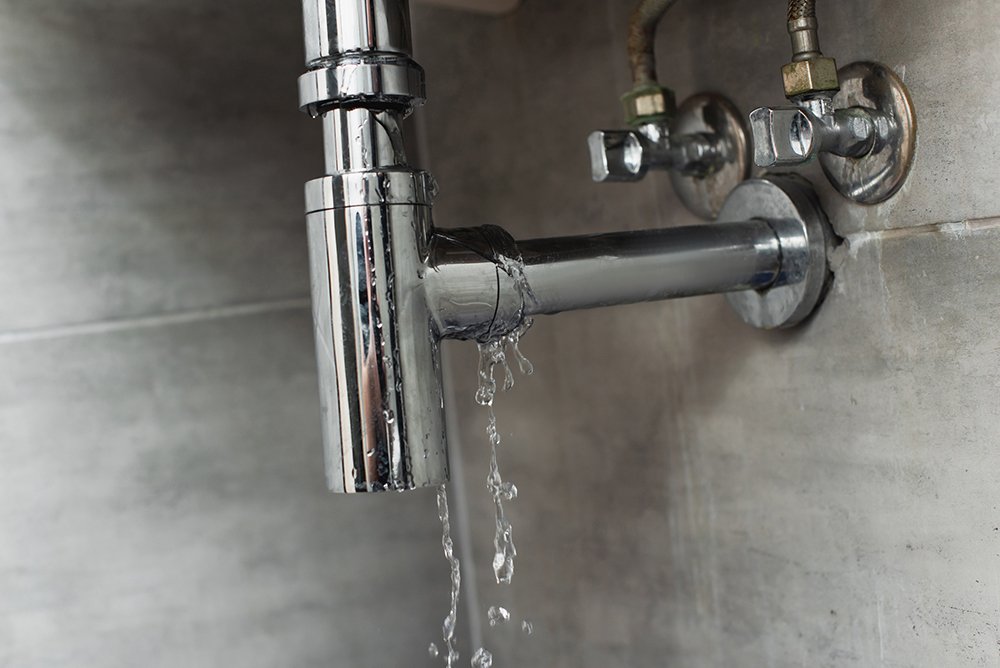
A pipe beneath a sink may leak only when water drains through it. In that case, turning off the faucet and leaving the fixture unused stops additional discharge into that drain.
A supply connection can continue leaking even when the faucet is off. That is why simply avoiding the sink is not enough for every leak.
If you cannot tell which side is leaking, shut off the fixture’s supply valves when safe and arrange an inspection.
3. Protect the Area Without Taking Electrical Risks
Move belongings out of the way and catch a small, accessible clean-water drip in a container. Dry reachable surfaces once the water source is controlled.
Do not enter standing water to unplug an appliance or reach a breaker panel. CDC advises against operating electrical equipment or switching power on or off while standing in water.
A bulging ceiling or visibly damaged surface needs professional attention. Keep people away rather than trying to drain or dismantle it yourself.
4. Arrange Repair Even if the Dripping Stops
Closing a valve controls the water source; it does not repair the failed pipe or connection.
Avoid overtightening fittings or applying a patch and assuming the problem is resolved. GoHero provides plumbing leak repairs to address the source of the leak.
Take photos of the affected area when safe, especially if water has damaged cabinets, flooring, or walls.
What if You Cannot Find the Leak?
A damp cabinet is easy to spot. A leak inside a wall or beneath a floor may show up as staining, an unexplained wet area, or a water bill that rises without a clear change in use.
If you have a water meter, you can check for unexplained flow by turning off fixtures and water-using appliances, then observing the meter. Account for equipment that may use water automatically.
Meter movement can suggest water is still flowing, but it does not identify the source. No movement during a short check does not rule out an intermittent leak.
GoHero’s leak-detection services can help locate hidden plumbing leaks before unnecessary surfaces are opened.
Avoid Fixes That Can Make the Problem Harder to Handle
Don’t Mix Drain Cleaners or Household Chemicals
Adding a second product to a drain that has not cleared can create another hazard. Poison Control advises never mixing cleaning chemicals because dangerous reactions can occur. Many drain cleaners also contain corrosive ingredients.
If a product is already in the drain, leave it alone and give the plumber its name.
Don’t Keep Testing a Backed-Up System
Repeated flushing or running another appliance can turn a contained problem into an overflow.
Describe what happened during normal use. You do not need to recreate a backup to prove it exists.
Don’t Force Tools Into Unfamiliar Plumbing
A powered drain machine is not a sensible first attempt for someone unfamiliar with the equipment. The wrong tool or technique can cause injury or damage fixtures.
For a simple accessible clog, limit yourself to straightforward measures you understand. Stop when the blockage resists, leaks appear, or several fixtures are involved.
When to Call a Plumber Promptly
Arrange help when:
You cannot stop an active leak.
Wastewater backs up into more than one fixture.
A clog returns after clearing.
Water appears inside a wall, beneath flooring, or through a ceiling.
A toilet overflows repeatedly.
A shutoff valve will not operate.
You cannot identify whether the problem is a drain blockage, supply leak, or septic issue.
For a Knoxville home with a single slow drain, the next step may be drain cleaning. For spreading water, it may be leak repair. Tell GoHero which fixtures are affected, whether water is still flowing, and what you have already tried.
Once the source is identified, our team can explain the repair options and help you get the affected plumbing back in service.
Frequently Asked Questions
Will Turning Off the Main Water Valve Stop a Sewer Backup?
It prevents additional water from entering through your home’s water supply, but it does not remove a blockage or stop wastewater entering from elsewhere. Stop using plumbing and get the backup assessed.
Can a Clog Cause a Leak Under the Sink?
A blockage can leave water standing in drain piping and expose a weak connection. However, the leak could also come from a supply line, faucet, or another component. Stop using the sink and identify the source before attempting repairs.
Can I Use Another Bathroom if One Drain Is Blocked?
Possibly, if the problem is isolated to one fixture. If other drains gurgle, slow down, or back up, stop using water throughout the home until the shared plumbing is checked.
Is a Small Drip an Emergency?
A contained drip is different from uncontrolled flooding, but it still needs attention. A leak near electrical equipment or inside a wall can require prompt help even when little water is visible.
Should I Pour Boiling Water Down a Clogged Drain?
It is not a dependable fix for an unknown blockage and introduces a scalding risk. Avoid pouring it into standing water or a drain containing chemicals. Remove accessible debris or use an appropriate plunger when conditions are safe; leave persistent clogs for a plumber.