 2157 Reviews on Google


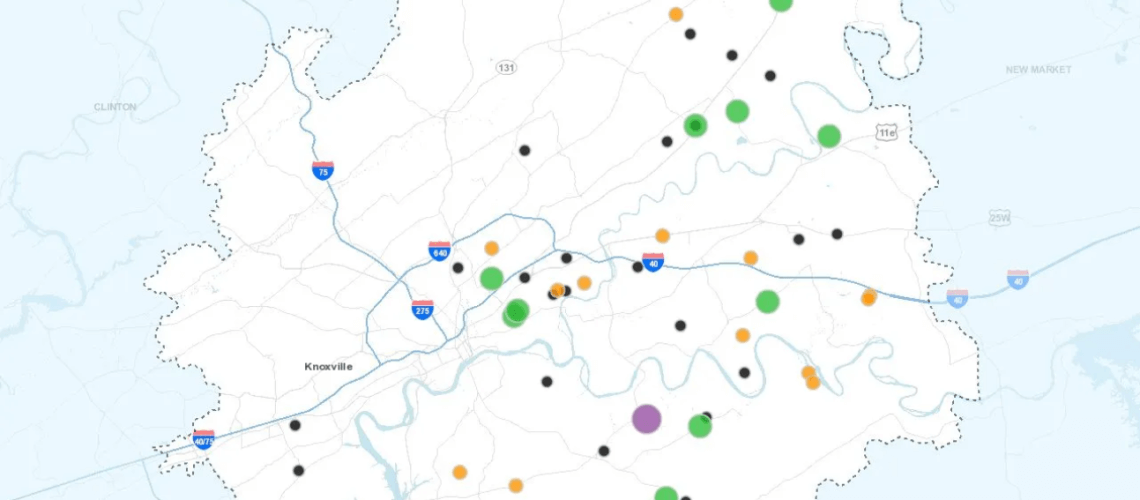
When the power goes out, start with your electric utility. Its outage map can show whether your neighborhood is affected, while its reporting system lets you report a problem at your address.
Use the directory below to find your provider’s official resources. Then check the steps for protecting your household and deciding whether you need the utility, an electrician, or both.
If you see a fallen power line, stay away from it and anything touching it. Report it to the utility. Call 911 for a fire, injury, or immediate threat to someone’s safety.
Find Your Electric Utility’s Outage Map
Choose the company listed on your electric bill. Your water provider may be a different organization, and a Knoxville, Powell, or Maryville mailing address does not necessarily identify your electric utility.
These links lead to utility resources, not an outage-monitoring service operated by GoHero. Check the provider’s page for current conditions and restoration updates.
| Electric Utility | Outage Resources |
|---|---|
| Knoxville Utilities Board — KUB | Outage map · Report an outage |
| Lenoir City Utilities Board — LCUB | Outage map · Outage reporting instructions |
| Clinton Utilities Board — CUB | Outage reporting instructions and map link |
| City of Maryville Electric Department | Report an outage and access the outage map |
| Alcoa Electric Department | Outage map and reporting portal |
| Appalachian Electric Cooperative — AEC | Outage center |
| LaFollette Utilities Board — LUB | Report an outage · Outage map |
| Powell Valley Electric Cooperative — PVEC | Outage reporting instructions and map link |
| Sevier County Electric System — SCES | Outage map · Outage reporting instructions |
| Fort Loudoun Electric Cooperative — FLEC | Outage reporting instructions and map link |
| Volunteer Energy Cooperative — VEC | Outage map |
| Rockwood Electric Utility — REU | Utility website with outage-map access |
The directory includes providers serving Knoxville and surrounding East Tennessee communities. Use your account information to confirm which one serves your property.
Need to Report an Outage by Phone?
Several local utilities publish dedicated reporting instructions:
LCUB: Call 844-687-5282.
Clinton Utilities Board: Call or text 865-457-9232. Its general website issue form is not for reporting outages.
Maryville Electric Department: Call the automated outage line at 865-983-8722.
Alcoa Electric Department: Call 865-380-4890.
Powell Valley Electric Cooperative: Call or text 877-753-5204.
Sevier County Electric System: Call the Power Action Line at 865-774-6300.
Have your service address and account information ready. Follow your utility’s instructions rather than assuming a social media comment will reach its outage-response team.
What to Do When Your Power Goes Out
1. Check for Immediate Hazards
Look for trouble from a safe location. Fallen wires, a damaged service connection, smoke, or sparking require a different response from an ordinary neighborhood outage.
Do not approach a downed line, move branches resting on wires, or touch damaged electrical equipment. Keep children and pets away. KUB instructs customers to report downed lines without approaching them.
If water has reached your electrical panel, outlets, or appliances, stay out of the affected area and get professional help.
2. Find Out Whether Nearby Homes Have Power
Check your utility’s outage map and, if practical, ask a neighbor whether their electricity is out.
If nearby homes are also affected, report your address through the utility’s approved system. If your neighbors have power, the problem may affect only your service connection or equipment inside your home.
Do not assume an empty outage map means your electrical system is at fault. Maryville notes that its map displays confirmed outages, which may not appear until a crew has investigated. Report the loss of service even if your address is not shown.
3. Check Your Breakers Only When It Is Safe
If the outage appears limited to your home, a tripped breaker is one possibility. Check the panel only if it is dry, undamaged, and safely accessible.
Do not remove the panel cover or touch exposed wiring. If you notice heat, a burning smell, buzzing, or visible damage, leave the equipment alone.
A breaker that trips again needs investigation. Repeatedly resetting it does not fix the underlying problem.
4. Report the Outage and Check for Updates
Use your provider’s reporting link, app, or published phone number. Give the service address, not just your mailing address if they differ.
Check for restoration updates through that same provider. An outage map is useful for seeing reported conditions; it cannot guarantee when electricity will return to your particular home.
Avoid making household safety decisions around an assumed restoration time. If you need powered medical equipment or cannot remain safely at home, put your backup plan into action.
Protect Your Household During an Extended Outage
Keep Refrigerators and Freezers Closed
Opening the door repeatedly lets cold air escape. With doors kept closed, CDC guidance gives these general limits:
Refrigerator: Food stays safe for up to four hours.
Full freezer: Food stays safe for about 48 hours.
Half-full freezer: Food stays safe for about 24 hours.
Use a cooler and ice when appropriate, and follow CDC food-safety guidance when deciding what to discard. Never taste food to determine whether it is safe.
Plan for Medical Equipment and Indoor Temperatures
Keep charged backup batteries available for essential devices. If someone relies on powered medical equipment, work with their healthcare provider and equipment supplier on an outage plan before the next interruption.
During an outage, follow that plan rather than waiting for a restoration estimate. Move to a suitable location if necessary and safe to do so. Call 911 for a medical emergency.
Have an alternative location in mind for dangerous heat or cold, too. Never use a gas oven or range to heat your home.
Use Flashlights and Conserve Phone Power
Keep flashlights or battery-powered lanterns where you can find them in the dark. A charged power bank and battery-powered radio can help you stay informed without draining your phone.
Unplug nonessential electronics and appliances to reduce exposure to electrical surges when service returns. Leave a light switched on so you can tell when power has been restored.
Should You Call the Utility or an Electrician?
Report a loss of utility service to your electric provider first. GoHero cannot dispatch utility crews or provide restoration times for a neighborhood outage.
An electrician may be needed when the problem involves your home’s wiring, panel, or customer-owned service equipment. Examples include a breaker that keeps tripping, damaged equipment, or electrical problems that continue after utility service returns.
Sometimes both are involved. KUB explains that damage to customer-owned equipment, such as a weatherhead or meter socket, may require repairs by a qualified electrician before it can reconnect service. Responsibilities depend on the utility and the equipment involved.
If you are unsure, describe the situation to your utility. Ask whether it needs to inspect the service connection and whether repairs by an electrician are required.
What Can a Home Generator Actually Power?
A backup generator can supply electricity during an outage, but its capabilities depend on the system installed.
Some homes need backup power for a refrigerator, selected lighting, and a few essential circuits. Others need to support heating and cooling equipment or a well pump. Those loads require different amounts of power, especially when motors start.
“Whole-home generator” does not mean every appliance can necessarily run at the same time. Generator capacity, starting demand, transfer equipment, and load-management settings determine what can operate together. Fuel availability and maintenance also affect whether the system will be ready when needed.
Standby Generators
A properly configured standby system can detect a utility interruption, start automatically, and transfer designated household loads to generator power.
There is still a transition period. A standby generator should not be treated as an uninterrupted power supply for equipment that cannot tolerate a brief loss of electricity.
Before installation, identify what you need to keep running. An electrician can assess those loads and recommend an appropriate system and connection arrangement.
Portable Generators
A portable generator may supply selected equipment, but safe placement and connection matter.
Operate it outdoors, at least 20 feet from doors, windows, and vents, with exhaust directed away from the home. Never run it in a garage, basement, or other enclosed or partially enclosed space. Use working carbon monoxide alarms with battery backup.
Never plug a generator into a household wall outlet. That can backfeed electricity into utility lines and endanger workers and neighbors. Have an electrician determine the approved transfer equipment and connections needed before connecting a generator to your home’s wiring.
Plan Backup Power Before the Next Outage
Start with the equipment your household cannot reasonably go without. A refrigerator and a few lights present a different sizing problem from central air conditioning, an electric water heater, and a well pump.
GoHero Home Services provides home generator installation, repair, and maintenance in Knoxville, including transfer-switch installation and portable-generator connections. Our team can assess your electrical needs and explain which backup options fit your home.
For an active utility outage, use your provider’s resources above. For backup-power planning or problems with your home’s electrical equipment, contact GoHero to discuss the next step.
Frequently Asked Questions
Why Is My Power Out When My Neighbors Still Have Electricity?
The problem may affect your individual utility connection, a smaller section of the distribution system, or equipment at your home. Report the outage to your utility even if nearby properties have power.
Do not assume the problem is inside your house simply because the rest of the street has electricity.
What if My Outage Is Not on the Map?
Report it through your utility’s approved system. Maps can take time to reflect newly reported or confirmed problems. Check that you are viewing the correct provider and service area.
Can GoHero Tell Me When My Power Will Come Back?
Your electric utility is the source for information about utility restoration. GoHero can help with customer-owned electrical equipment and generator services, but cannot set the utility’s repair schedule.
Will a Generator Keep My Air Conditioner Running?
That depends on the generator’s capacity, your air conditioner’s starting and running requirements, and the other loads connected to the system. Have those demands evaluated before choosing equipment.
Why Does My Generator Run but Some Circuits Still Have No Power?
The system may be configured to supply only selected circuits, or load-management controls may be limiting which equipment can operate. There could also be a fault requiring service. Check the system’s operating instructions and arrange an inspection if its behavior differs from the intended setup.