 2157 Reviews on Google


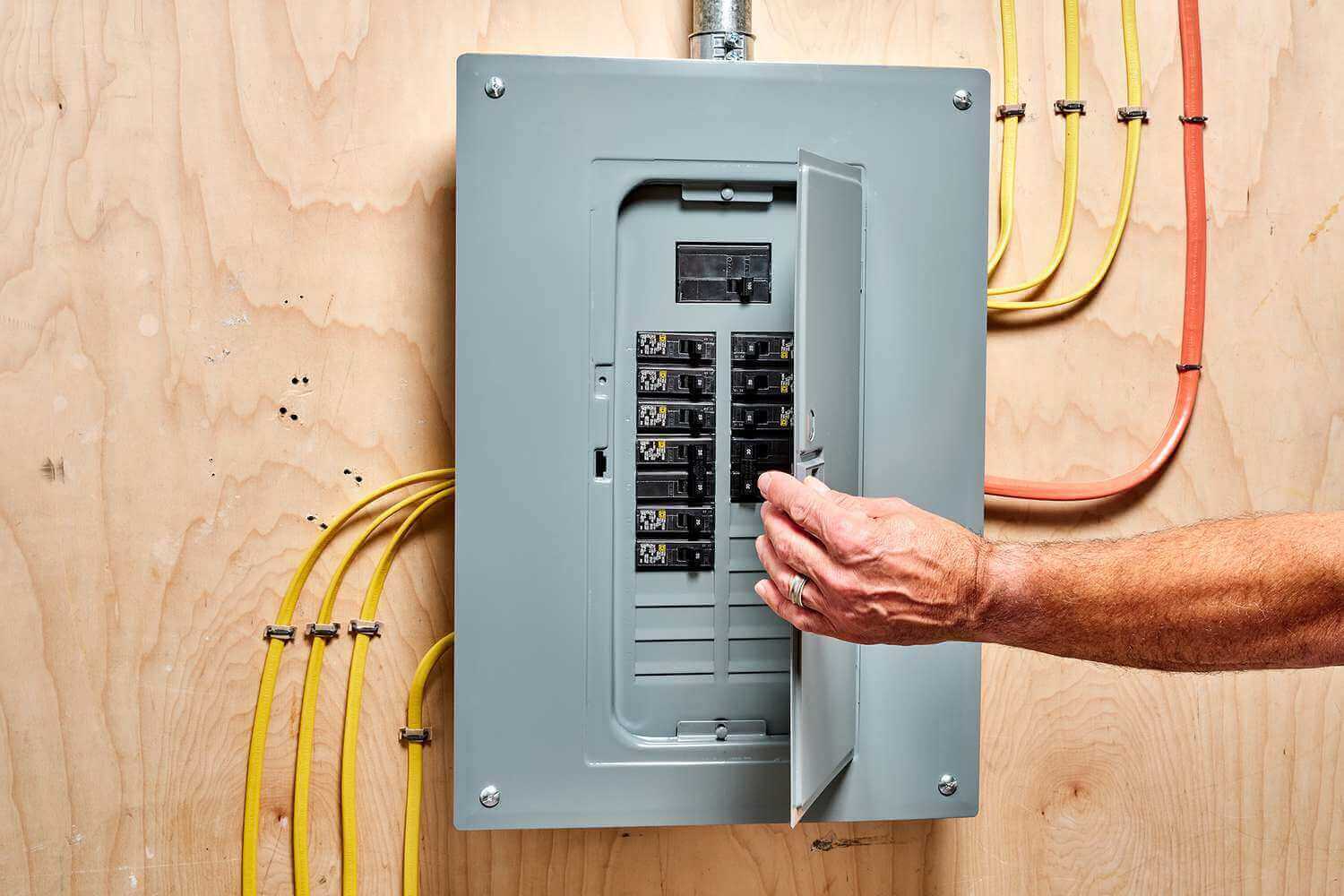
How much electricity your home can use is closely correlated to how many appliances can be used simultaneously. If your electrical service is only 60 amps, you will need more power to run a hair dryer, electric water heater, and stove simultaneously. However, you can use numerous appliances at once with a 200-amp service.
1. What Is The Standard Electrical Service For Residential Properties?
A 200-amp, single-phase electrical service that operates at either 120 or 240 volts will be the most prevalent kind of electrical service in 2020 or 2021. This happens rather often for a few different reasons. It seems that 100 amp services are becoming a thing of the past, and there are not enough circuit sizes available in the panel for you to do anything with them. The majority of electrical panels rated at 100 amps have a cap of 40 crts. Second, the price differential between 100 amp services and 200 amp services has shrunk significantly in recent years. Therefore, it is in your best interest to upgrade to 200 amps in terms of both selling value and installation cost. Most modern electrical panels are much bigger in size and have the potential to handle the greater actual weight. The capacity of several of the breaker panels has been increased to sixty circuits at this point. This includes either 120 micro breakers or 60 full-sized breakers. In other words, even with the code being altered, this is more than sufficient.
2. What is The Standard Residential Electrical Service When it is Underground?
The most common size for subterranean services is likewise 200 amps, and the majority of today’s newly constructed residences also have 200 amp services installed. In terms of residential building codes, you are permitted to use up to one hundred percent of the capacity of 200-amp service. This indicates that there is no limit on the demand load that may be placed on the service and that it can accommodate up to 200 amps. This, however, may have an effect on the amount of your wires depending on how far your subterranean connection runs. The greater the wire size that must be used for the 200 amp subterranean service, the longer the length of the service. This is done so that a voltage drop may be accommodated across a certain distance since the resistance inside a conductor increases proportionally with the length of the conductor. It is in your best interest to speak with an electrician in your area, particularly if you want to install wires underground for any distance to reach a pole. Due to the bigger size of the wire, there are instances in which the price of the wire is required to be increased. When you reach a certain point in your journey, it is possible that continuing any farther underground will no longer be to your advantage. At this point, it could be more helpful for you to talk to the power provider that serves your area about the possibility of more poles being put farther away from the road. In this scenario, the driveway would be rather lengthy in the event that the home is constructed in the rear of the land.
You must determine which of the major components of your home’s electrical distribution system—such as the wire, the conduit, the meter, the panel, and the main breaker—has the lowest amperage rating to determine the appropriate size of your electrical service. Its rating applies to the entire electric service provided to your home.
- Measure the pipe’s or conduit’s width where the main service wire is located. If you have above-ground service, the conduit is a pipe that enters your home from the main electric wire suspended from a pole. If you have underground service, the conduit enters your home from the main wire buried in the ground. One-inch conduits can accommodate wires for 60-amp services, whereas one-and-a-quarter-inch conduits can accommodate wires for 100-amp services. A 60-amp service could enter your home through a conduit that is only two inches in diameter because so many conduits are large.
- If you can, measure the principal service wire’s gauge. Six-gauge copper wire has a carrying capacity of 60 amps, four-gauge wire of 100 amps, two-gauge wire of 125 amps, one-gauge wire of 150 amps, and 2/0 copper wire of 200 amps. The wire is larger when the gauge is lower.
- Verify the electric meter to see if it has an amperage rating. It may be printed on the front or a label affixed to the body.
- Look to determine if your electrical panel’s label specifies the maximum number of amps it can withstand. The label may have been added by the panel manufacturer, an inspector, or both during your panel installation or a subsequent inspection.
- Check the amperage rating of the primary breaker or fuse on your electrical service panel, which may or may not be located near the other breakers and fuses there. The biggest breakers you have are typically the important ones. It should specify how much it can contain on it or right next to it.
- Find the lowest rating by comparing the three. The lowest number represents the electrical service capacity of your home.