 2157 Reviews on Google


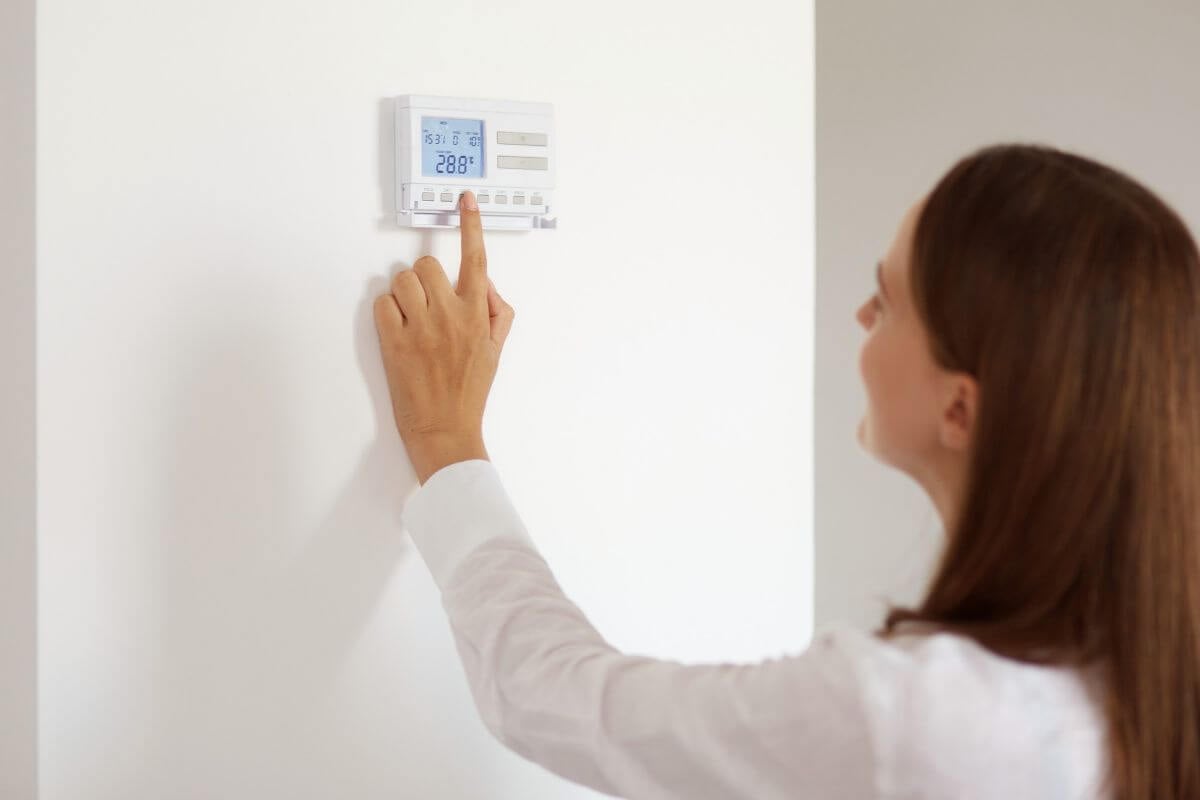
AUX HEAT on your thermostat means the system is getting help, not that something has failed. EM HEAT means something different: it’s a backup-only setting that typically takes the heat pump out of operation entirely. That distinction matters on a cold Knoxville morning when your home feels slow to warm up.
In the heat pump emergency heat vs. auxiliary heat comparison, auxiliary heat is automatic support that runs alongside the heat pump, while emergency heat is a manual setting meant for when the primary system can’t operate. The two labels look similar on a thermostat, but they describe very different situations, and using one when you need the other can cost you.
What Auxiliary Heat Actually Does
Auxiliary heat is a secondary heat source the thermostat activates automatically when the heat pump can’t meet the home’s heating demand on its own. An air source heat pump moves heat from outdoor air indoors even in cool weather, but its capacity drops as temperatures fall, and that’s when backup heat steps in.
Common AUX HEAT triggers:
- Cold Outdoor Conditions: The heat pump may need help as available heat in the outdoor air decreases.
- Large Temperature Changes: Raising the thermostat several degrees at once can prompt backup heat to help the house recover faster.
- Defrost Cycles: The outdoor unit periodically removes frost from its coil, and auxiliary heat keeps indoor air comfortable while that happens.
- High Heating Demand: A home may need supplemental heat when heat loss exceeds what the heat pump can provide at that moment.
There isn’t one temperature at which AUX HEAT should appear. The balance point (the outdoor condition where the heat pump alone no longer matches the home’s heating demand) depends on equipment size, insulation, ductwork, thermostat settings, and the home itself.
What Emergency Heat Does Differently
Emergency heat is a manually selected mode that locks out the outdoor heat pump and runs the backup heat source by itself. It’s intended for situations where the heat pump can’t operate properly, not as a stronger everyday heating setting.
For many systems, the backup source is electric resistance heat strips inside the indoor unit. Other homes have a dual-fuel heat pump that pairs the heat pump with a gas furnace. The key difference between auxiliary heat and emergency heat comes down to whether the outdoor unit is still part of the process: auxiliary heat runs alongside the heat pump, while emergency heat tells the system not to use the heat pump at all.
That’s why EM HEAT shouldn’t be left on just because temperatures have dropped. If the outdoor unit is capable of operating, normal HEAT mode lets the system use its intended controls and decide when backup heat is needed.
Auxiliary Heat vs. Emergency Heat at a Glance
- Auxiliary Heat: The thermostat activates backup heat automatically while the heat pump may continue running.
- Emergency Heat: The homeowner selects the mode manually, and the heat pump is typically disabled.
- Electric Backup Heat: Resistance heat strips can use significantly more electricity when they carry a large share of the heating load.
- Dual Fuel Backup Heat: Operating cost depends on the furnace, fuel source, controls, and equipment configuration.
Emergency heat isn’t more powerful, safer, or more efficient than normal heat pump operation. It’s simply a way to keep the home heated when the primary heat pump shouldn’t run. Leaving it enabled for days means your backup heat is doing all the work while the outdoor unit sits idle, and your energy bill reflects that.
When AUX Heat Is Normal and When It’s a Warning
Brief AUX HEAT operation is normal during colder weather, after a substantial thermostat setback, or during a defrost cycle. This is a process where the system temporarily reverses operation to melt frost on the outdoor coil while backup heat prevents cool air from reaching the living space. Seeing the label for a limited period doesn’t by itself mean the heat pump needs repair.
Long or frequent auxiliary heat operation deserves closer attention when the weather isn’t especially demanding or the home still can’t reach the set temperature. Comfort problems can also stem from restricted airflow, thermostat issues, duct problems, electrical faults, or a heat pump that isn’t delivering its expected capacity.
Signs that merit investigation:
- Persistent AUX HEAT: Backup heat runs for long periods or appears repeatedly under moderate conditions.
- Falling Indoor Temperature: The house stays below the thermostat setting even while the system calls for heat.
- Outdoor Unit Problems: The unit doesn’t run when it should, makes unusual sounds, or has ice that won’t clear.
- Electrical Problems: A breaker trips repeatedly or the system shuts down unexpectedly.
Start with safe, visible checks: confirm the thermostat is set to HEAT rather than EM HEAT, replace a dirty air filter, make sure supply and return vents are open, and clear leaves or loose debris from around the outdoor unit. Don’t open electrical panels or try to chip ice from coils.
What to Do When Your Thermostat Shows EM HEAT
First, determine whether EM HEAT was selected intentionally. If it wasn’t, return the thermostat to normal HEAT mode and watch whether the outdoor unit runs during a heating call. A unit that stays off, a home that keeps cooling, or a thermostat that returns to backup heat on its own all point to a need for diagnosis.
Don’t treat emergency heat as a default winter setting. The system may be locking out a functioning heat pump, and an electric resistance backup can consume considerably more electricity when it must heat the entire home alone. If the outdoor unit won’t run, avoid repeatedly switching modes hoping it will restart. When a technician arrives, the useful details are what the thermostat displayed, whether the indoor fan ran, whether the outdoor unit operated, and whether any breaker tripped.
How to Reduce Unnecessary Backup Heat Operation
Seasonal attention goes a long way. A clean filter, clear airflow around the outdoor unit, open vents, and steady thermostat settings all help the system run as designed. Large overnight setbacks can force the system to work harder during morning recovery. Smaller adjustments or a steadier setting may reduce how often supplemental heat gets called in, depending on your thermostat and system configuration.
When AUX HEAT becomes a pattern, the answer isn’t to guess at a replacement or leave emergency heat on. A complete evaluation should cover airflow, thermostat staging, electrical components, refrigerant operation, the outdoor unit, and the home’s overall heating demand. Those factors determine whether the issue is a control setting, a maintenance need, or an equipment problem. If your system stays in backup heat, can’t maintain comfort, or shows signs of trouble, get a professional diagnosis rather than letting emergency heat become a long-term workaround.